

Floods
Be flood smart: What you should do before, during and after a flood, and where to get current flood information.
Overview
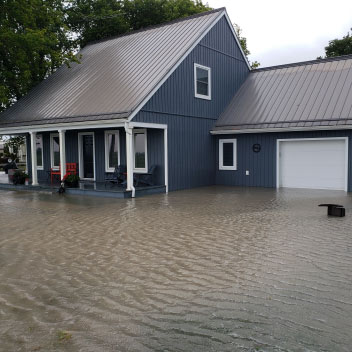
Flooding in Ontario is typically caused by:
- rapidly melting snow
- ice jams
- high lake levels or storm surges
- heavy rains and thunderstorms
Floods can happen at any time of year, in both urban and rural areas.
Flash floods can happen suddenly due to heavy rain or fast-melting snow. They can quickly become dangerous.
Knowing about flood risks and how to prepare for them will help keep you safe and minimize damage to your property.
Floods are the costliest natural hazard in terms of property damage, causing:
- shoreline erosion
- damage to roads and infrastructure
- power outages
Flood Forecasting and Warning Program
Visit the Flood Forecasting and Warning Program page to find:
- a map of local and provincial flood messages (warnings)
- information about the types of flood messages issued by the province, conservation authorities and other agencies
- who to contact for more information about local flood messaging and on-the-ground flood response
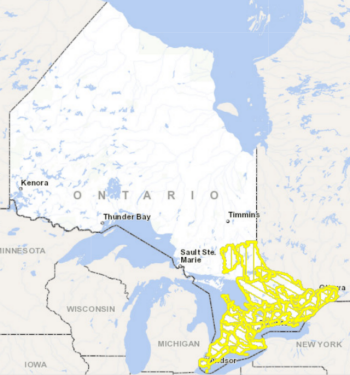
Ontario flood map
Dam failures
Extreme floods are one of the primary causes of dam failure.
When lake and river levels rise due to heavy rain or fast-melting snow, water levels can exceed the capacity of the dam.
Stay safe around dams and spillways. If you notice warning or caution signs at a dam site, follow the instructions, stay back and leave the area.
If you live, work or play near a dam, stay informed by following local flood warnings and emergency advisories, including any dam-specific notifications.
Call 911 if there is an immediate risk to people or property.
Contact your local conservation authority or municipality immediately if you notice:
- dam failure due to structural issues or extreme weather events
- a washed-out or unsafe bridge
- stored water released in an uncontrolled manner
- potential danger to people or watercrafts on, around or near dams
- muddy water, ice jams, water over the dam deck or debris buildup
Before a flood
Make an emergency plan and kit
Prepare for a flood by creating an emergency preparedness plan and kit for you and your household.
You can also get emergency preparedness guides for:
- people with disabilities
- children
- seniors
- pets
Know where to find local emergency information
Municipalities
Municipalities are responsible for:
- emergency response to flood events
- protecting residents and property
Check your municipality’s website to find out what flooding support they provide.
Conservation authorities
Your local conservation authority:
- monitors watershed and weather conditions for possible flooding
- Communicates information about rivers and lake safety
- issues local flood notifications to municipalities and emergency management officials
- operates conservation area-owned flood control structures like dams and reservoirs
Find your local conservation authority.
Ontario Ministry of Natural Resources
The Ministry of Natural Resources:
- operates the Flood Forecasting and Warning Program and Surface Water Monitoring Centre
- provides public safety services to Indigenous communities and unincorporated or unorganized areas
- supports municipalities with flood response
- operates and monitors ministry-owned water control structures like dams and weirs
Take steps to prevent flooding in your home
- Extend downspouts at least 2 metres from your home to move water away from the building.
- Shovel snow at least 1 to 1.5 metres away from your home’s foundation.
- Put weather protection sealant around basement windows and ground-level doors.
- Keep gutters and nearby storm drains clear of debris.
- Remove debris from water drainage systems such as weeping tile, culverts and ditches.
- Install paving surfaces for sidewalks and driveways that allow water to drain through, such as gravel, cobblestones or spaced pavers.
- Find out if your private well could be impacted by flood water and maintain wellhead protection.
- Test sump pumps and install a back-up power system such as a battery back-up or generator. Test your back-up system regularly.
- Install check valves in sewer traps to prevent floodwater from backing up into your home’s drains.
- Check your basement for signs of flooding and consider installing a water-sensing alarm system.
Take steps to reduce flood damage
- Store personal belongings and important documents in watertight containers on upper shelves or upper floors.
- Securely fix any oil tanks or fuel sources to the floor to prevent movement during floods.
- Use flood resistant drywall and exterior doors to minimize water damage.
- Install electrical outlets higher on the walls of your ground floor to avoid water contact.
- Lift basement appliances off the ground with wood or cement blocks.
- Make sure basement drains are not blocked.
- Remove yard clutter that could present danger during flood events.
- Secure outdoor furniture and items on or around a shoreline.
Check if you have overland flood insurance
Overland flooding happens when water from heavy rain or melting snow flows overground and enters your home.
Overland flood insurance can protect you from the costs of flood damage, but it is not automatically included in home insurance policies.
Check with your insurance provider to find out if your home is covered.
Helpful links
- Flooding and insurance information (Insurance Bureau of Canada)
- How to make an emergency plan and kit
- Home Flood Protection Program (Intact Centre on Climate Adaptation)
During a flood
If you are told to evacuate by emergency officials, evacuate immediately.
Staying in the area during an evacuation order can be dangerous for you, your family and first responders.
If an evacuation order is not in place, consider the following safety precautions.
If you are indoors
- Make sure necessary personal items (medications and important documents) are secured and easily accessible in case you need to evacuate.
- Disconnect electrical appliances — do not touch electrical equipment or turn off appliances if they are wet or standing in water.
- Move small appliances and furniture to upper floors or areas unlikely to be flooded.
- Do not eat food that has come in contact with flood water.
- Ensure your cellphone is charged (safely) — it may be your only means of communication during an evacuation.
- Do not use taps, showers and toilets if your septic tank or the septic tank disposal field is under water.
- Remove toxic substances such as pesticides and insecticides from the flood area to prevent them from spilling.
If you are outdoors
- If your property is impacted by flooding:
- leave the area immediately if your electricity is on
- follow your emergency plan and move to a safe place on higher ground
- Avoid travelling on roads that are near water, bridges, ravines, embankments, low laying areas and any bodies of water.
- Do not drive through, stand or walk in any moving water.
- If you are in your car and it begins to flood, get out of the car immediately and find higher ground.
- Account for all members of your household, keeping children and pets away from flood water.
Helpful links
- Ontario weather conditions and forecast
- List of Ontario municipalities
- How to build a sandbag dike (video)
After a flood
Before returning home, check with your local municipality for any information from your public health unit, utilities and other community officials who are working to keep you and your family safe.
- Do not enter a building where the walls or floors are visibly buckled.
- Do not use flooded appliances, electrical outlets, switch boxes or fuse breaker panels until they have been checked by your local authority.
- Do not eat food that has come in contact with flood waters.
- Contact your local municipality about debris management programs.
- Report any broken utility lines to the appropriate authorities.
If your property has been damaged
- Contact your insurance company for claims information before you clean up.
- Take safety precautions during cleanup and watch for signs of mould.
- Check if you need permits to rebuild or restore your property.
- You may be eligible for provincial assistance.
Helpful links
Non-emergency contact information
- For on-the-ground flood response, such as providing sandbags and debris removal, visit your municipality’s website.
- For local flood information, visit your local conservation authority’s website.
- For communities not serviced by a conservation authority, contact your ministry work centre.
- For First Nation communities, contact Indigenous Services Canada.
- To plan your route in an event of a flood and for travel safety, call or visit 511.